Trekking the Endosomal Pathway
Trekking the Endosomal Pathway
Chau Vo, Kimberly Bennett, Paula Hammond
Koch Institute at MIT
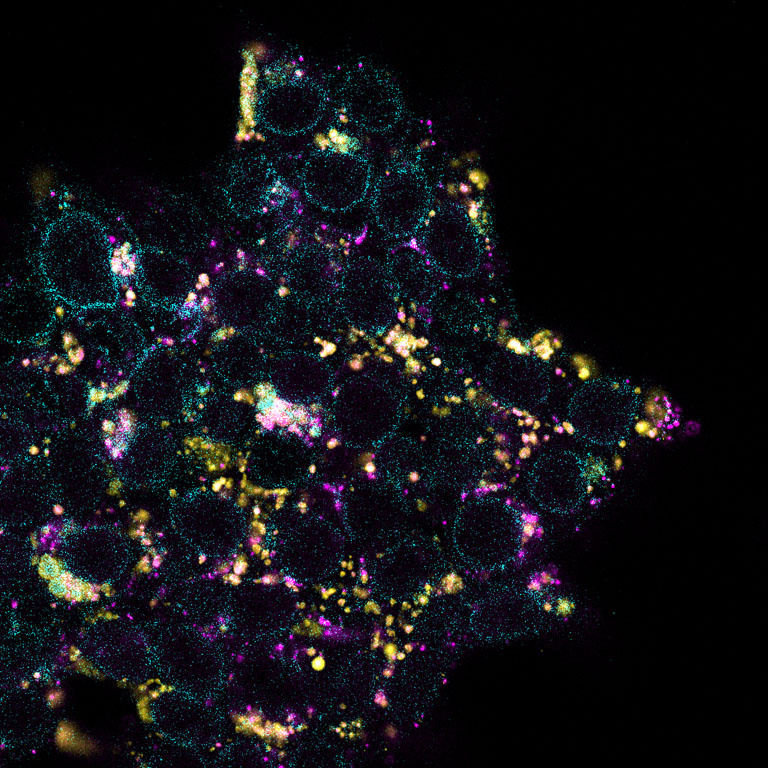
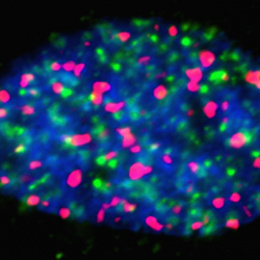
While mRNA holds immense promise as a cancer therapeutic, its journey to the cytosol, where the mRNA is translated into a protein, is hindered by cellular defense mechanisms. A primary obstacle is the endosomal-lysosomal pathway, which sequesters and degrades internalized materials. To circumvent this, the Hammond Lab has designed a polymeric delivery system to encapsulate mRNA and facilitate endosomal escape, often via mechanisms like the proton-sponge effect, to avoid degradation. In this image, the mRNAs (magenta) have successfully escaped the endosomes (yellow) to reach the cytosol, as shown by separate clusters of mRNA and endosomes within the cell (cyan). As mRNAs reach the cytosol, they are translated into a therapeutic protein, such as an immune-stimulatory or cancer-toxic protein, ultimately initiating a response against the cancer cell.