The Nodes Know
The Nodes Know
Taylor Heim, Stefani Spranger
Koch Institute at MIT
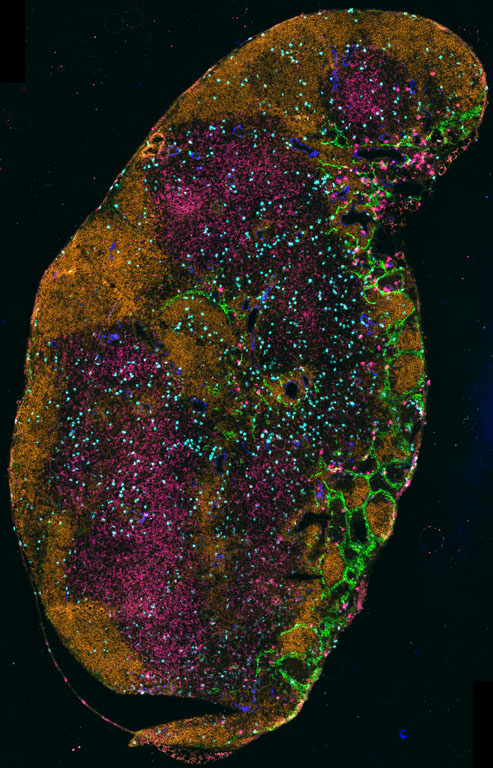
Lymph nodes are regionalized hubs of immunity where adaptive immune responses are generated and, paradoxically, the most common sites of cancer metastasis. Shown here is the mediastinal lymph node, which surveys for signs of infection and cancer in the lungs. This image was captured 40 days after influenza infection and highlights the highly compartmentalized architecture of the lymph node.The lymph node is supported by blood vasculature (blue), which delivers nutrients and circulating immune cells, and lymphatic vasculature (green), which drains debris and antigens from the upstream lung. The majority of the cells in the lymph node are either T cells or B cells. B cells, shown in orange, produce copious amounts of antibodies which help protect us from future encounters with viruses. T cells, shown in magenta, are essential for killing virally infected cells as well as cancer cells.
CD8⁺ memory T cells (cyan), generated following influenza infection, exhibit high cytotoxic capacity. Note the widespread distribution of cyan cells throughout the node, suggesting a robust potential for protection against both pathogens and cancer. Our project seeks to harness these influenza-induced memory T cells to prevent cancer metastasis.